
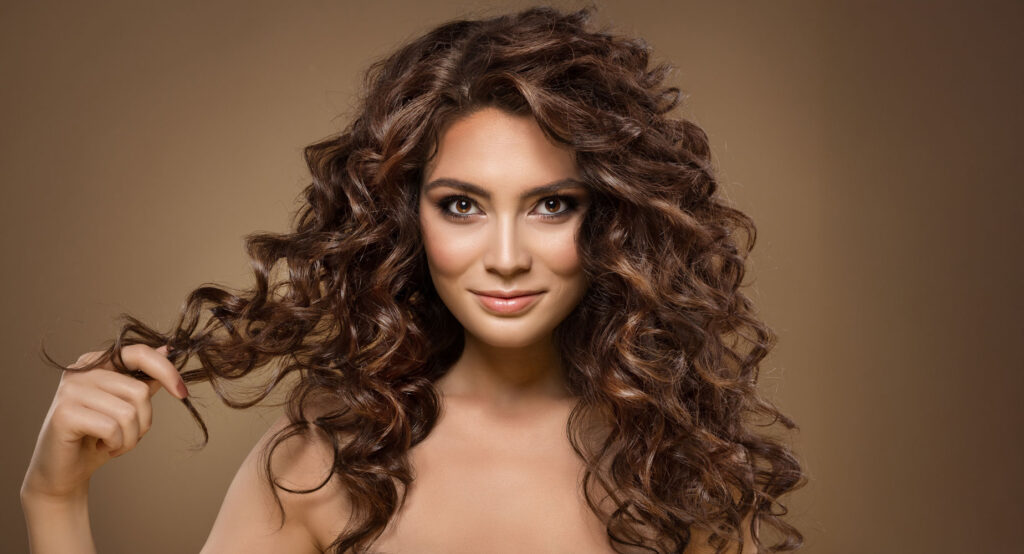
Curly hair isn’t “just hair with a kink”. It behaves differently, dries differently, lifts differently, and needs a stylist who understands its personality. At Aaron Jones Hairdressing, curls aren’t something we work around; they’re a speciality.
Over the years, we’ve seen clients travel from across the Wirral and Liverpool, from Birkenhead to Blundellsands, because it’s hard to find stylists who truly understand curls. That’s why we invested in professional curl training across the team, learning techniques that work with your natural pattern, never against it.
Whether you’ve got loose waves, springy curls, or coils with real attitude, we cut and care for your hair in a way that enhances what you already have, and send you home with a new lease of life for you, and your curls.
Why curls need specialist cutting
Curly hair doesn’t behave like straight hair, so it shouldn’t be cut like straight hair, either.
Here’s why a specialist approach matters:
- Curls shrink when dry, meaning a wet cut often leads to accidental unevenness.
- Each curl clump behaves differently, so shaping has to follow your curl pattern, not a generic cutting line.
- Weight distribution is everything: removing too much can cause frizz, but leaving too much can create unwanted bulk.
- Products matter, because harsh detergents, silicones and waxes can mask your curl pattern and weigh down movement.
This is why curl-by-curl cutting exists: it’s a method built around respect for your natural pattern, making sure your curls fall beautifully the moment you leave the salon, and for weeks after.
Common curly hair struggles (and why they happen)
Curly hair is gorgeous; but often misunderstood. Most of the challenges people face aren’t because their curls are “difficult”, but because they’ve never had a cut, routine, or advice designed specifically for textured hair.
That’s why so many curl clients tell us the same stories, no matter where in Liverpool or the Wirral they’re visiting from.
Here are the issues we hear most often:
- Cuts that dry into a triangle shape or sit wide at the bottom,
- Uneven lengths caused by wet-cut shrinkage,
- Curls that lose definition quickly, especially in humidity,
- Heavy products that weigh hair down or create greasy roots,
- Persistent frizz that doesn’t settle no matter what you try,
- Struggling to refresh curls between washes,
- Feeling unsure which techniques or products actually work for your curl type.
Most of these problems come down to one simple truth: curls behave differently to straight hair, so they need to be cut and cared for differently. What’s more, different types of curly hair behave differently to one another, too. That’s why a specialised approach makes all the difference. If you’re exploring curly hair services in Wirral and Crosby, this is exactly why specialist cutting and curl-aware care matter.
Understanding curl types (and why it matters)
Before we talk about cutting techniques, it helps to understand what curl types actually are.
There’s much more to curls than you might think, which means there’s much more to cutting them than most people realise.
Professionals often refer to the curl type chart, a system used to describe different curl patterns:
- Type 2 (Wavy) – loose S-shaped waves
- Type 3 (Curly) – springy, corkscrew curls
- Type 4 (Coily) – tight coils with zig-zag or spiral shapes
Within each category, there are sub-types (like 2A or 4C), which describe how loose, tight, fine, or dense your curls are.
You don’t need to memorise these letters and numbers, (that’s our job), but understanding where your curls sit on the spectrum helps us tailor your cut, routine, and product choices.
Of course, if you are interested in the science behind your luscious waves and want to learn more, this quick guide to the science of curly hair should make for an interesting read.
And if you’re curious, your stylist will happily walk you through your curl type during your appointment.
Curls we work with
Our specialists work with all the curl types we’ve just mentioned, using techniques that suit where you sit on the curl type chart, including:
- Wavy (2A–2C) – gentle shaping to enhance movement and reduce frizz
- Curly (3A–3C) – curl-by-curl definition, structured shaping, and hydration
- Coily (4A–4C) – softening, sculpting, and balancing for shape and ease
Whether your curls are loose, tight, bouncy, unpredictable or somewhere in between, we’ll tailor your cut and care to your hair’s unique behaviour.
What to expect from a specialist curly hair appointment
A great curl cut starts long before the scissors come out. Our approach is designed to help you understand your curls as much as we do, so you can keep them looking their best long after your appointment.
1. A longer curl consultation
Your first curl appointment includes a detailed consultation. This gives us the time and breathing room to:
- Understand your curl pattern, density, and lifestyle,
- Talk through what you find difficult and what you want to achieve,
- Look at your curls in their dry, natural state; without straightening, pulling, or forcing them flat,
- Create a personalised plan for your cut, shape, and styling routine.
This time together gives us the foundation to create a cut that works for you every day, not just for the salon chair.
2. Dry curl-by-curl cutting
We cut curls in their natural pattern: dry, defined, and exactly as they fall. This technique lets us:
- Respect your curl structure,
- Build shape without shrinkage surprises,
- Add balance and movement where you need it most,
- Avoid triangle shapes or weighed-down sections.
It’s a precise, thoughtful method designed to bring out the very best in your curls.
3. Curl-friendly cleansing, conditioning and styling
Once your shape is in place, we move to the backwash for a cleanse and condition using O&M and CENTRED: our vegan, cruelty-free, low-tox ranges chosen because they’re kind to curls and gentle on sensitive scalps.
If you’d like a deeper look at the products we use, (and why they work so well for curly hair), you can read more in our full Products guide.
4. Aftercare you can actually follow
We help you go home with simple, realistic advice that fits your lifestyle, not strict routines or hour-long refresh methods.
You’ll leave with tips on:
- How to wash and condition for your curl type,
- How to refresh curls between washes,
- How to style without weighing down your hair,
- Which products will support your curls, (and which to avoid).
We want your curls to feel just as good on day three as they do on day one, and that starts with aftercare that’s genuinely doable.
Why clients choose our curly specialists
Many clients tell us they’ve had bad experiences elsewhere: cuts done wet, layers that shrink unexpectedly, or products that leave their curls feeling heavy or crunchy. We’re here to change that experience entirely.
Our curly appointments are designed to help you:
- Understand your curls better,
- Reduce day-to-day styling stress,
- Build shape and definition that lasts,
- Keep your hair healthy between appointments.
And if you’re visiting us during the week, you may even be able to take advantage of our NHS, Blue Light, or student discounts, available with selected stylists. You can learn more about these on our NHS & Student Discounts page.
What makes a curl appointment at Aaron Jones different?
A few things set us apart:
- Training that’s curl-specific; not just “how to cut hair, but curly”.
- A calm, inclusive atmosphere; curls, coils, waves… everyone’s welcome.
- Real advice you can use at home, not a product push or a five-step routine you’ll never keep up with.
- Premium, low-tox products that support healthy curls without harsh chemicals.
- A cut that grows out beautifully, keeping your shape for longer.
When we talk about “specialist curly cutting”, this is what we mean. If you’d like to explore the service itself, you can learn more about our curly hair services in Wirral and Crosby.
Frequently Asked Questions
Do you cut curly hair wet or dry?
We cut curls dry, using a curl-by-curl technique that lets us see your curls exactly as they fall naturally. Wet hair stretches and hides how much it will spring back once dry, so cutting to a wet line often leads to uneven length or an unwanted triangle shape. Working dry means the shape you see in the mirror is the shape you leave with.
How often should I get my curly hair cut?
Most curl types hold their shape well with a trim every 6 to 8 weeks. Curls grow out differently to straight hair, so leaving it much longer can mean losing definition and shape rather than just length. Your stylist will confirm the right interval for your curl pattern during your consultation.
Will a normal hairdresser know how to cut curly hair?
Not necessarily. Curly hair behaves differently to straight hair at every stage, from shrinkage to weight distribution, so cutting it like straight hair often causes the uneven results many curl clients tell us they’ve had elsewhere. That’s why our whole team has had curl-specific training, rather than general cutting experience alone.
What should I do before a curly hair appointment?
Come in with your curls in their natural state, without straightening, heat styling, or heavy product, so we can see exactly how your hair behaves. This is part of why our curl consultations run longer than a standard cut: we need to see your curl pattern properly before planning your cut and routine. There’s no need to prepare anything else. We’ll talk you through the rest at your appointment.
Why does my curly hair look uneven after a haircut?
This is usually down to wet cutting. Curls shrink significantly when they dry, so a cut made to a wet line often ends up shorter or wider than intended once your hair springs back into shape. Dry, curl-by-curl cutting avoids this, because the length and shape you see is the length and shape you keep.
Will you help me work out my curl type?
Yes, your stylist will talk you through your curl type as part of your consultation. Understanding whether your curls are wavy, curly, or coily, and where they sit within that range, helps us tailor your cut, products, and aftercare rather than using one approach for every client. You don’t need to know this in advance. We’ll do the assessment for you.
Can the wrong products make my curls worse?
Yes. Heavy detergents, silicones, and waxes can mask your natural curl pattern and weigh curls down, which is often why curls that looked great in the salon lose definition at home. We use O&M and CENTRED, which are formulated to support curl pattern and movement rather than flatten it, and we’ll tell you which products to use and which to avoid for your hair.
Are curly hair appointments more expensive?
Specialist curl cutting usually costs a little more than a standard cut, since it involves a longer consultation and more precise, curl-by-curl work. Exact pricing depends on your curl type and the service you choose, so it’s best to check our current prices before you book.
Do you offer discounts on curly hair appointments?
Yes, NHS, Blue Light and student discounts may apply to some curly appointments with selected stylists. You can find full details on our NHS & Student Discounts page, or ask when you book.